Overview

EXTENDED TILL MARCH 28TH
-
Gallery 1957 is pleased to present Son of Man, Can These Bones Live?, the first European and London debut solo exhibition by Ghanaian artist Kwaku Yaro, opening 22 January 2026 at the gallery’s London space.
Drawing its title from the Book of Ezekiel (37:3), the exhibition reflects on a moment of address rather than resolution. In the biblical passage, the prophet is not asked to restore the dry bones before him, but to speak to them. Yaro’s work inhabits this gesture—approaching materials, histories, and bodies not as objects to be redeemed, but as presences to be acknowledged.
For Yaro, the valley of dry bones is not metaphorical. It is Accra: a living terrain shaped by migration, circulation, and survival. Across the city’s markets and streets, the Across the city’s markets and streets, the residues of global consumption—second-hand clothing, plastic materials, worn domestic objects—accumulate and transform through daily use. Yaro’s practice emerges from this environment, insisting on material truth without aestheticizing poverty or romanticizing resilience.
Central to the exhibition is the Ghana Must Go bag, a material deeply embedded in both personal and collective histories of migration. In Yaro’s work, the bag exceeds its historical associations to become a second skin—worn, stretched, and inscribed with memory. No longer a container, it carries lived experience itself. The exhibition brings together sculptural works that form a familial constellation: figures representing siblings and a maternal origin, their arms cast in gold toned bronze—a subtle reference to the former Gold Coast. These works do not monumentalize heroism, but testify to endurance, continuity, and inherited presence.
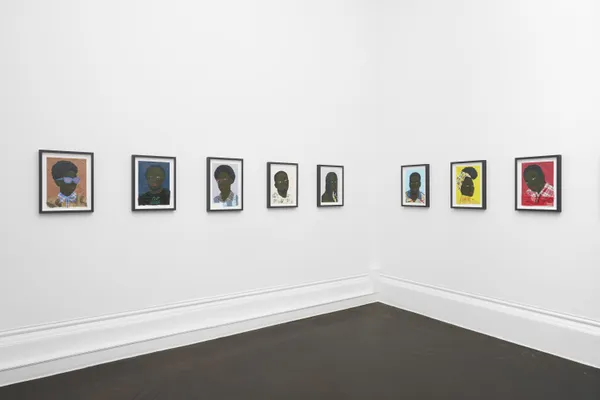
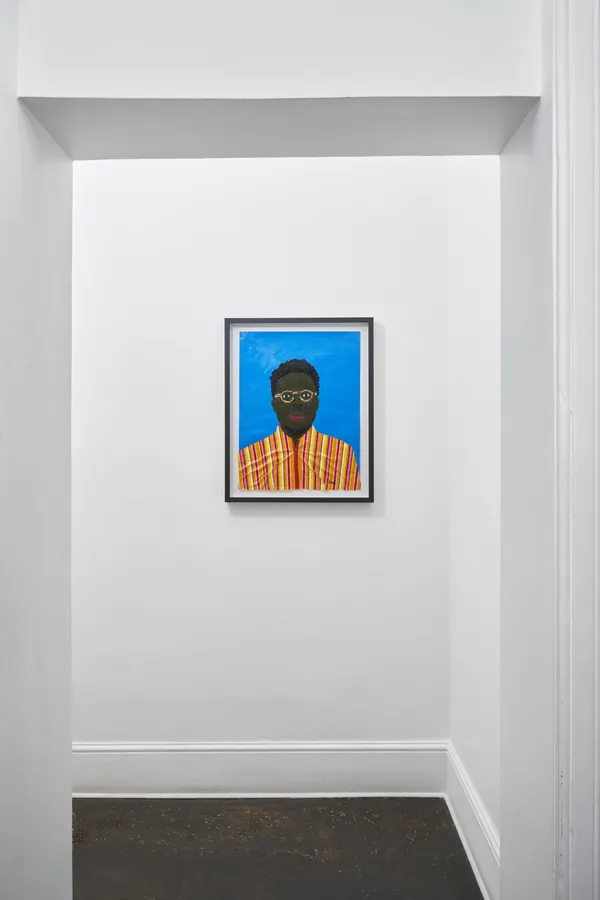
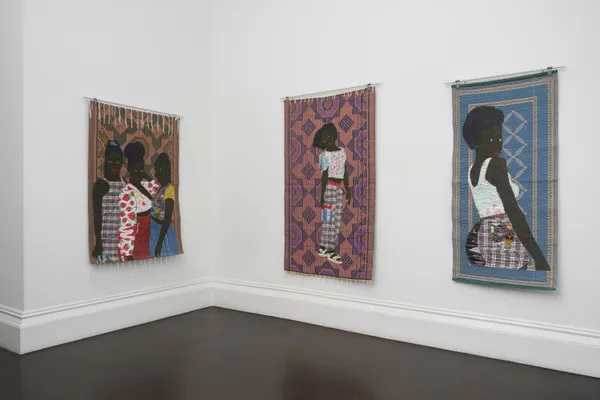
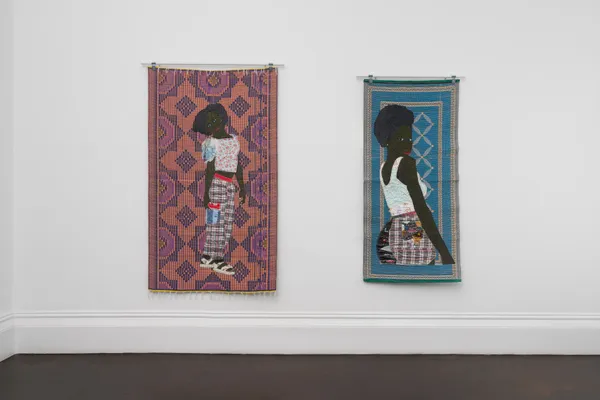
Works on paper introduce a parallel rhythm through a pointillist technique, in which each mark maintains its individuality while contributing to a larger whole. The exhibition culminates in works incorporating woven polypropylene mats—portable grounds commonly used across West Africa for rest, prayer, and gathering. Here, the mat becomes a foundation rather than a backdrop, carrying bodily memory and domestic intimacy. As figure and ground begin to merge, the work moves toward essentiality and clarity.
Son of Man, Can These Bones Live? marks a moment of clarity in Kwaku Yaro’s practice—rooted in familiar materials and histories, yet asserting a new posture of frontal presence and assumed direction.
Download the press release & curatorial essay below for more information.
Installation Views